Friday, May 8, 2020

What is the composition of styling gas?
Styling gel is made of mostly styling polymers, which are usually based on vinyl monomers such as PVP (Polyvinyl Pyrolidone) or VP (Vinyl Pyrolidone).

Styling is made up of many things and certain types of gel are made with different materials based on what the final outcome is supposed to look like but normal gel is made up of these substances.
Styling gel is made of mostly styling polymers, which are usually based on vinyl monomers such as PVP (Polyvinyl Pyrolidone) or VP (Vinyl Pyrolidone).
Styling is made up of many things and certain types of gel are made with different materials based on what the final outcome is supposed to look like but normal gel is made up of these substances.
Main Chemicals, Compounds, Components
- Water- (H2O)
- Carbomer made from inserting a (C2) unit to a given molecule
- Disodium EDTA(Adjustment Agent)
- Glycerin(Humectant)-(C3H8O3)
- Benzophenone-4(Stabilizer)-(C14 H12O6S)
- ,Dazolidinyl urea, or iodoprophynyl butylcarbamate (Preservative)-(IPBC)
- PVP K-90(Styling Polymer) PVP/ dimethylaminoethylmethacrylate copolymer(Styling gel)-(no chemical formula but is most of the time used as powder or clear aqueous solution to form the gel like texture)
- Oleth-20(Solubilizer)-(C38H76O11)
- Aminomethylpropanol(Neutalizer)- (C4H11NO)
How many lessons in chemistry in class 10th of CBSE?
According to new syllabus CBSE are consider 5 chapters in Chemistry.




According to new syllabus CBSE are consider 5 chapters in Chemistry.
The CBSE Class 10 Chemistry's chapter are listed below:
Unit I: Chemical Substances – Nature and BehaviourChemical Reactions: Chemical equation, Balanced chemical equation, implications of a balanced chemical equation, types of chemical reactions: combination, decomposition, displacement, double displacement, precipitation, neutralization, oxidation and reduction.
Acids, Bases and Salts: Their definitions in terms of furnishing of H+ and OH– ions, General properties, examples and uses, concept of pH scale (Definition relating to logarithm not required), importance of pH in everyday life; preparation and uses of Sodium Hydroxide, Bleaching powder, Baking soda, Washing soda and Plaster of Paris.
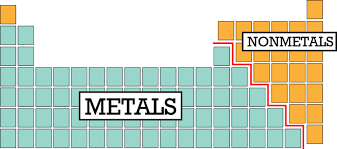
Metals And Nonmetals: Properties of metals and non-metals; Reactivity series; Formation and properties of ionic compounds; Basic metallurgical processes; Corrosion and its prevention.
Carbon Compounds: Covalent bonding in carbon compounds. Versatile nature of carbon. Homologous series. Nomenclature of carbon compounds containing functional groups (halogens, alcohol, ketones, aldehydes, alkanes and alkynes), the difference between saturated hydrocarbons and unsaturated hydrocarbons. Chemical properties of carbon compounds (combustion, oxidation, addition and substitution reaction). Ethanol and Ethanoic acid (only properties and uses), soaps and detergents.
Periodic Classification Of Elements: Need for classification, early attempts at classification of elements (Dobereiner’s Triads, Newland’s Law of Octaves, Mendeleev’s Periodic Table), Modern periodic table, gradation in properties, valency, atomic number, metallic and non-metallic properties.
Thursday, May 7, 2020
What is mode of treatment for polymer gas poisoning?
Test performed to confirm chlorine gas poisoning and monitor patients for supportive care include pulse oximetry, testing serum electrolyte, blood urea nitrogen (BUN), and creatinine levels.
Measuring arterial blood gases, chest radiography, electrocardiogram (ECG), pulmonary function testing, and laryngoscopy or bronchoscopy.
Ploymer gas poisoning are does not treat by any anti-dote. but it can be refuse by some medical medicine like as
Antimicrobial ointments, such as silver sulfadiazine, mafenide,
silver nitrate, and providone-iodine help reduce the risk of infection.

Bacitracin may be used for first-degree burns.
Antibiotics, such as oxacillin, mezlocillin, and gentamicin help treat infection.


Test performed to confirm chlorine gas poisoning and monitor patients for supportive care include pulse oximetry, testing serum electrolyte, blood urea nitrogen (BUN), and creatinine levels.
Measuring arterial blood gases, chest radiography, electrocardiogram (ECG), pulmonary function testing, and laryngoscopy or bronchoscopy.
Ploymer gas poisoning are does not treat by any anti-dote. but it can be refuse by some medical medicine like as
Antimicrobial ointments, such as silver sulfadiazine, mafenide,
silver nitrate, and providone-iodine help reduce the risk of infection.
Bacitracin may be used for first-degree burns.
Antibiotics, such as oxacillin, mezlocillin, and gentamicin help treat infection.
Subscribe to:
Posts (Atom)